Journal — Travel
Choosing the right dog carrier for travel.
Whether you are flying cross-country or driving to the coast, the carrier you choose determines your dog's comfort, safety, and your own peace of mind. This guide breaks down airline regulations, sizing rules, and the features that separate a basic bag from a premium dog carrier built for real journeys.
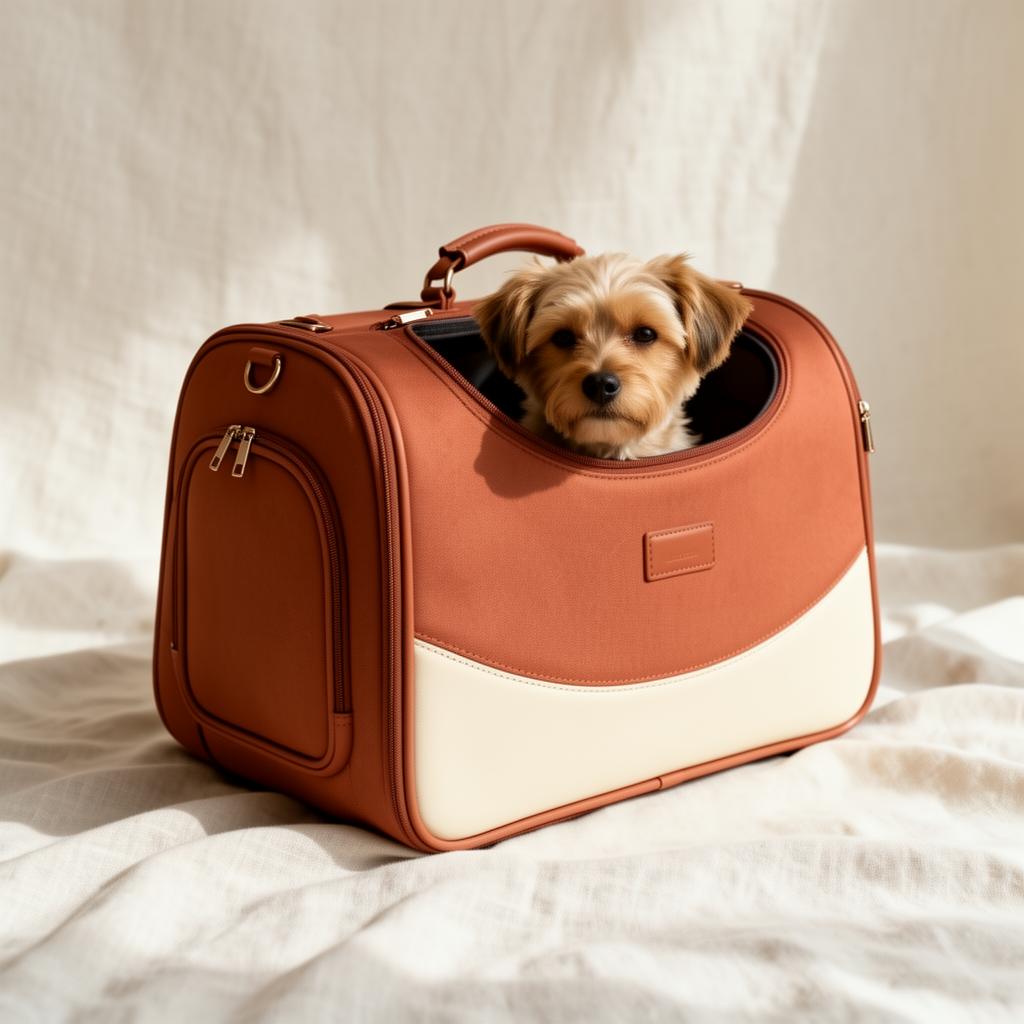
A well-designed carrier is the difference between a stressful trip and a calm one.
Why the carrier choice matters more than you think.
Dogs experience travel differently than humans. The unfamiliar sounds of an airport, the vibration of a train, or the motion of a car can trigger anxiety in even the calmest pet. A thoughtfully designed carrier acts as a mobile safe space — familiar scents, limited visual stimuli, and stable footing help regulate stress.
For air travel, the stakes are higher. Airlines enforce strict size and weight limits for cabin carriers. If your bag is even an inch too large, you may be forced to check your dog into cargo — a scenario most owners want to avoid. Understanding airline approved pet carrier requirements before you buy saves money, time, and unnecessary worry at the gate.
Understanding airline regulations for pet carriers.
Most major airlines allow small dogs in the cabin provided the carrier fits under the seat in front of you. The typical maximum dimensions fall around 18 inches long by 11 inches wide by 11 inches high, but this varies by aircraft and carrier. Always check your specific airline's pet policy before purchasing.
Weight limits usually include the dog plus the carrier, commonly capped between 15 and 20 pounds. Soft-sided carriers have a slight advantage here: their flexible walls can compress slightly to fit under angled seats, whereas hard-sided boxes offer no give.
Ventilation is non-negotiable. Airlines require carriers to have ventilation on at least three sides. Look for mesh panels that are reinforced with fabric borders — cheap mesh can tear under stress, creating an escape risk in a busy terminal.
Size limits.
Typically ~18″ × 11″ × 11″ for under-seat fit. Measure your dog sitting and standing, then add 2–3 inches for the carrier shell.
Weight limits.
Combined pet + carrier weight is usually limited to 15–20 lbs. Weigh your dog at home and choose a lightweight bag to stay under the threshold.
Documentation.
Many airlines require a health certificate issued within 10 days of travel. Keep vaccination records and carrier tags accessible in the outer pocket.
Matching the carrier to your pet's size and temperament.
A carrier should allow your dog to stand, turn around, and lie down comfortably. For length, measure from the base of the tail to the tip of the nose. For height, measure from the floor to the top of the head while standing. Add a small buffer — about two to three inches — to each dimension for the carrier structure itself.
Temperament matters just as much as size. A nervous dog benefits from a carrier with partially opaque walls or a privacy flap over the mesh — visibility increases anxiety for some animals. Confident travelers may prefer a wide viewing window and extra ventilation. If your dog tends to chew or scratch when stressed, prioritize reinforced seams and metal zipper closures over plastic hardware.
Types of travel carriers: which style suits your trip?
Soft-sided carriers.
The most popular choice for cabin air travel. Lightweight, flexible, and easy to stow under seats. Premium versions use aircraft-grade aluminum frames inside the walls to prevent collapse while keeping weight minimal. Best for small to medium-small dogs under 15 pounds.
Hard-sided carriers.
Rigid plastic shells offer superior protection from bumps and drops. They are required for cargo travel and ideal for car trips where the carrier may shift in the trunk. The downside is weight and lack of under-seat flexibility for cabin use.
Backpack carriers.
Excellent for hiking, urban commuting, and navigating crowded terminals hands-free. Look for padded shoulder straps, a sternum strap for weight distribution, and a solid base so your dog is not folded into a curve. Many premium backpack carriers double as car seats when buckled in.
Rolling carriers.
A rolling base with a detachable soft bag is ideal for long airport walks. Choose models where the wheels lock and the frame feels stable when tilted. The best rolling carriers convert to a shoulder bag or backpack when stairs or rough terrain appear.
Key features that define a premium dog carrier.
Not all carriers are built equally. These are the details that separate a bag you replace after one trip from one that lasts for years of travel.
Reinforced ventilation.
Mesh should be tightly woven and bordered with ballistic nylon or canvas. Some premium carriers use claw-resistant mesh that still allows strong airflow on three or four sides.
Structured base with removable padding.
A rigid or semi-rigid base prevents sagging and protects your dog's joints. Removable, washable fleece pads make cleaning easy after long trips or accidents.
Escape-proof closures.
Dual zipper pulls that can be locked together, plus interior leash tethers, prevent clever dogs from pushing their way out during boarding.
Multiple access points.
Top-loading doors are invaluable for cats and stubborn dogs, but side and front openings make it easier to coax a nervous pet inside without forcing them.
Luggage passthrough and seatbelt loops.
A sleeve that slides over a rolling suitcase handle saves your shoulder in airports. Seatbelt loops let you secure the carrier in a car, preventing dangerous movement during sudden stops.
What to pack inside the carrier.
A carrier is only part of the equation. What goes inside matters just as much for your dog's physical and emotional wellbeing.
Absorbent pad.
Line the base with a reusable absorbent pad or a disposable puppy pad. Long flights and traffic delays happen — be prepared without stressing your dog.
Familiar item.
A small blanket or toy that smells like home provides comfort in unfamiliar environments. Avoid bulky items that reduce your dog's space.
Collapsible bowl.
A silicone travel bowl fits in the outer pocket and lets you offer water during layovers without unpacking the entire bag.
Treats and chews.
High-value treats help reward calm behavior during security screening. A long-lasting chew distracts nervous dogs during takeoff and landing.
Wipes and bags.
Travel-sized pet wipes and waste bags are essential for post-flight cleanup and terminal walks. Store them in an easy reach outer pocket.
ID and health records.
Keep a copy of vaccination records and your vet's contact info in a waterproof sleeve attached to the carrier handle.
Ready to travel?
PetShop Care curates premium travel gear for modern pet owners — from airline approved pet carriers to travel bowls, leads, and calming aids. Every product is chosen with the same standard: is this genuinely good enough for your dog?